
Data flywheel
01More deployments
02More real-world data
03Better models
04More deployments
Enabling conditionFast, reliable offload into the learning pipelineUC60 docking / magnetic port
UC60 FOR HUMANOIDS
Contactless data at the dock and inside the joint. Two solutions that help humanoids scale.
Dedicated data links. Continuous rotary connectivity.
More deployments depend on better models and lower annual cost.
Higher volume can further lower purchase price.
01 / DATA OFFLOAD
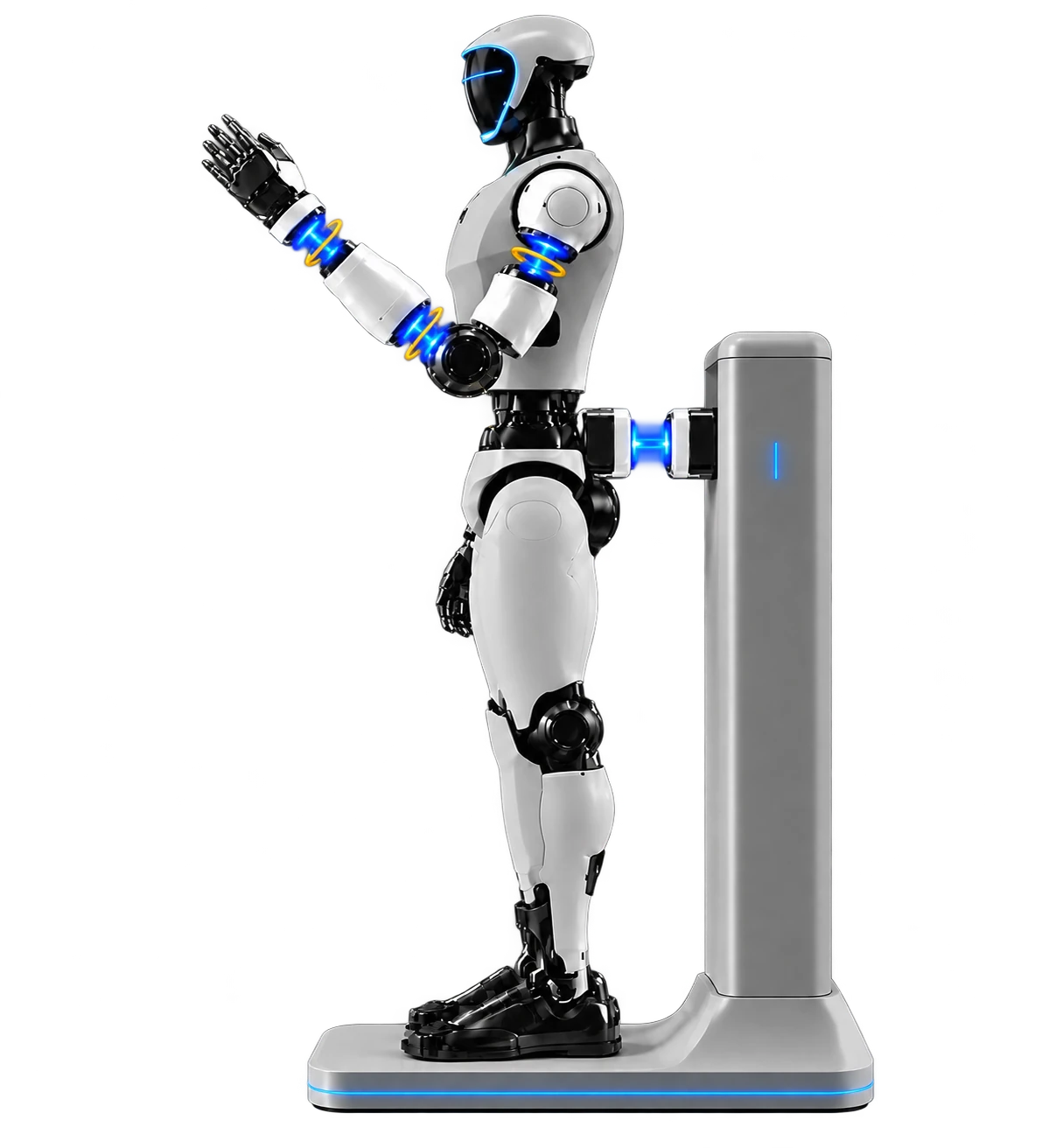
A dedicated robot-to-station link brings logged data to the server quickly and reliably, without depending on a shared Wi-Fi or cellular network.
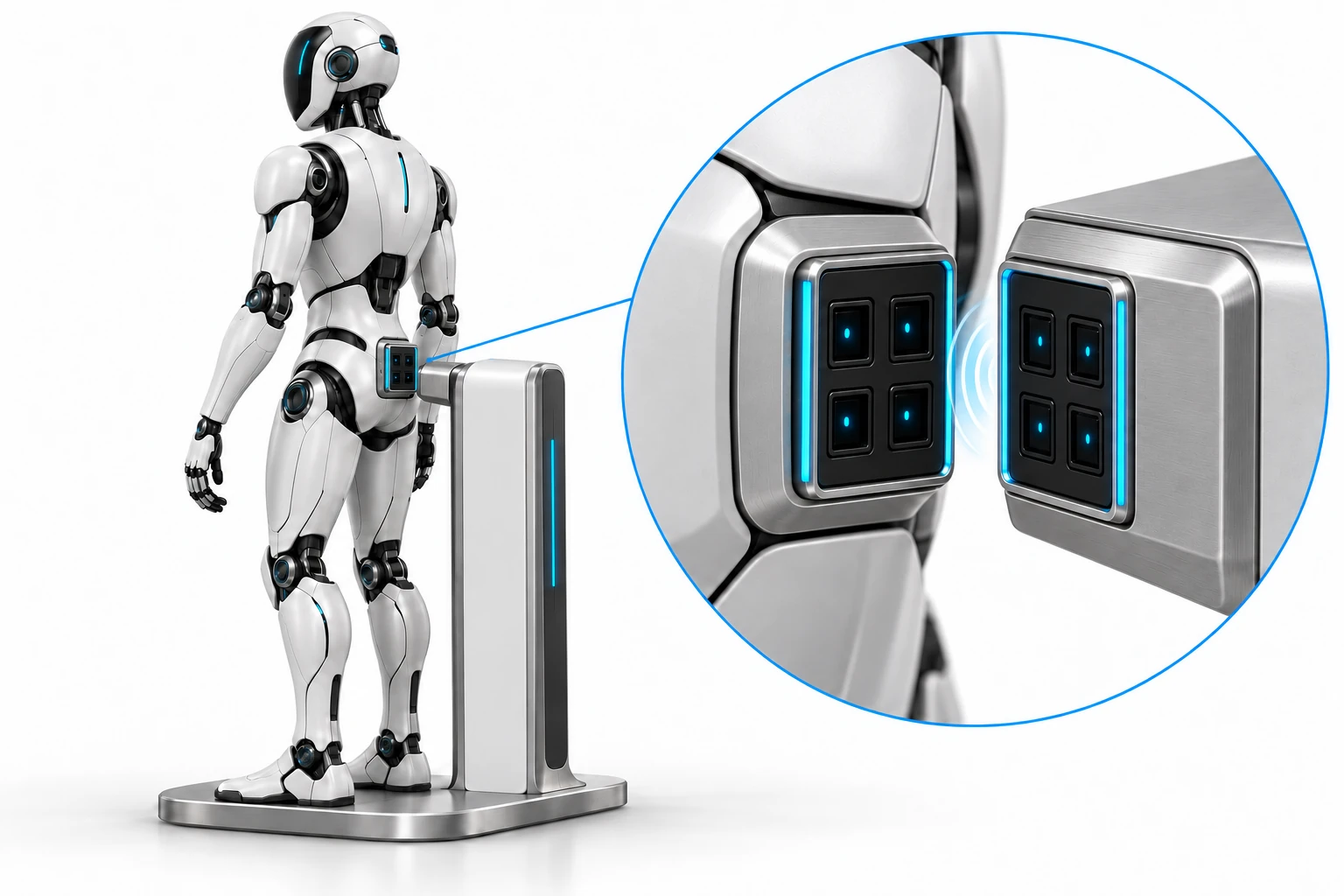
10GbE aggregate
The robot docks autonomously. Data crosses the docking gap without metal data contacts while the station supplies charging power.
Parallel channels; aggregate bandwidth is not a single native 10GbE lane.
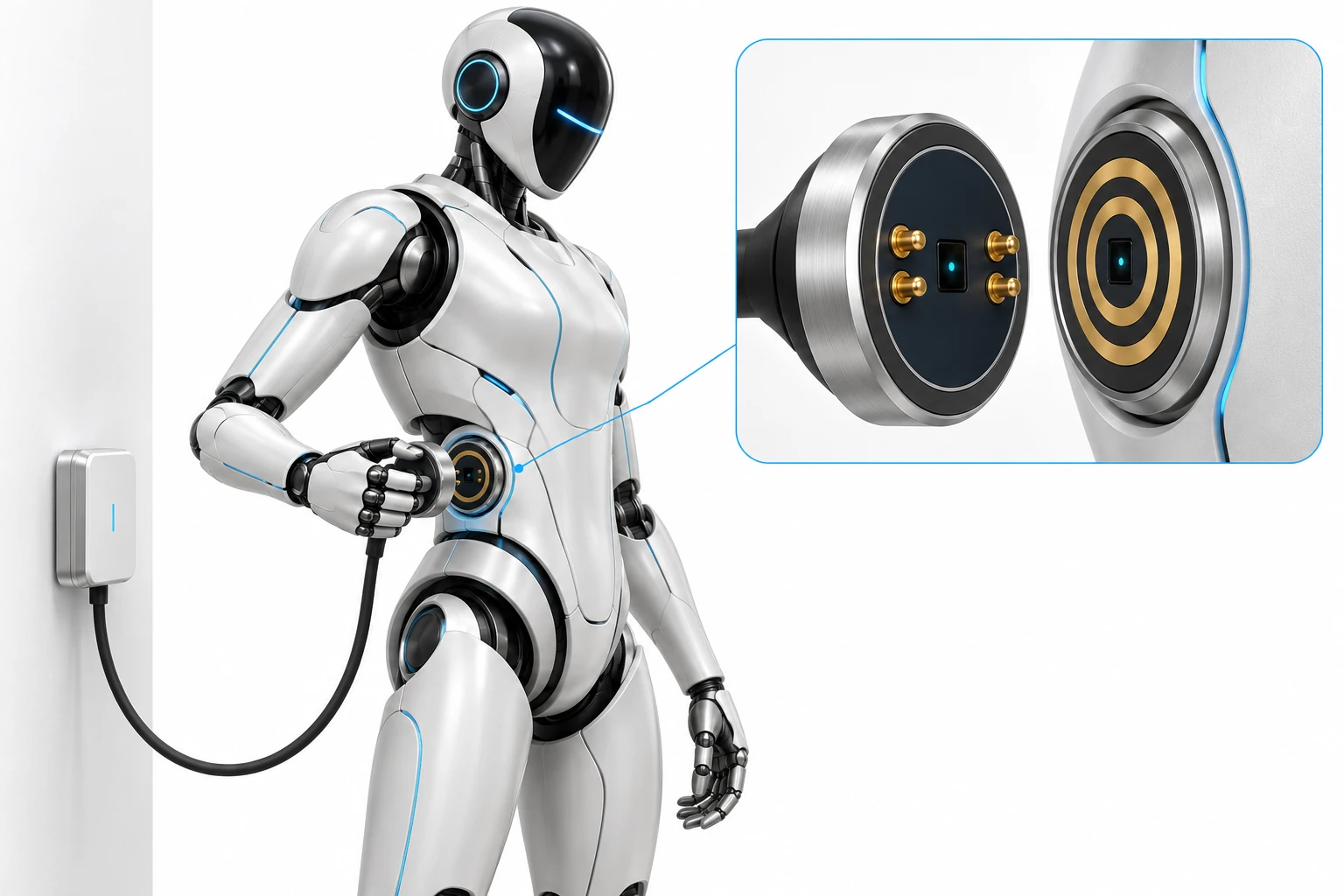
kW power + 2.5GbE data
A cable runs from a compact wall station to a magnetic port. The robot picks it up and attaches it at the waist.
Offload logs automatically when the robot charges.
Use a dedicated link independent of shared wireless congestion.
Automatic logs support remote analysis. Example: 1 visit/year × USD 500 × 30% avoided = USD 150/year.
Change the data volume and charging window to compare links.
Enter a value within the range shown in the input field.
Decimal GB. Wi-Fi/cellular: assumed effective 100 Mbps. GbE: 80% payload efficiency. Shared-network performance varies.
02 / ROTARY JOINTS
UC60 carries data across the rotating interface without contact. Metal brushes carry power. The downstream link and actuator rotate together.
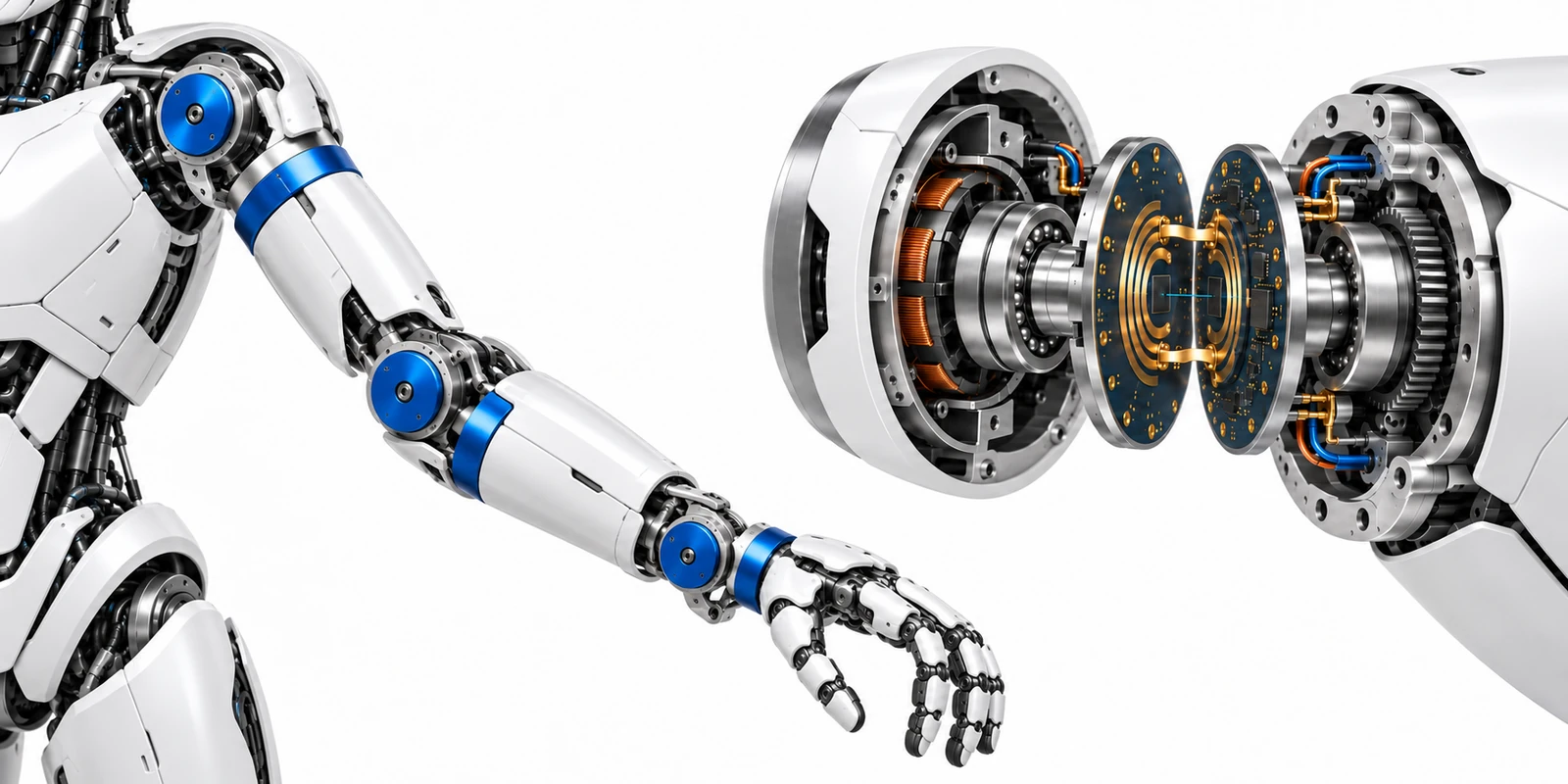
kW power + EtherCAT + other interfaces
Wiring must still meet electrical ratings. A smaller bore increases bending stiffness for the same outer diameter and material.
Keep MDI links. Add PHY / magnetics adapters and UC60 at the rotary interface.
Use a compatible serial interface to UC60. Remove external PHYs and magnetics on the illustrated inter-actuator link.
Keep power on contacts. Move EtherCAT data off contacts.
Both eliminate cable twist. The difference is whether high-speed data still crosses sliding contacts.
Both paths use sliding contacts
Only power uses sliding contacts
Contacting designPrecision data contacts, contact materials, shielding and assembly add cost.
UC60 hybridReplace data-contact mechanics with UC60. Type B also removes external PHYs and magnetics.
Contacting designControl impedance and crosstalk while separating high-speed data from power noise.
UC60 hybridRemoving the data rings can simplify the shielding and separation structures around those contacts.
Contacting designData rings, separation gaps and associated shielding occupy axial space.
UC60 hybridReplace the data-ring stack with facing UC60 modules: an opportunity to reduce axial height.
Contacting designData-channel life depends on ring/brush wear and the condition of the electrical contacts.
UC60 hybridNo sliding data contacts: remove data-contact wear and contact-resistance drift from the link.
Contacting designSliding data and power contacts can both generate wear particles.
UC60 hybridNo data-contact abrasion, so no wear debris from that data interface.
Remove high-speed data-contact constraints from the joint design.
Contactless benefits apply to the data interface. Power-contact wear/debris management and RF/EMC design remain; price and height benefits depend on the final specification.
03 / COST IMPACT
Use your own assumptions to explore the combined impact of longer service life and lower maintenance.
Enter a value within the range shown in the input field.
Annual cost = purchase price ÷ service life + annual O&M
Illustration, not a lifetime guarantee or quoted saving. The 2-to-5-year and 50% O&M scenario assumes both solutions, remote diagnosis and easier service. Additional solution cost is not included.
If cable twist limits life to 2 years and the next component lasts 5 years, removing that limit opens a 2.5× service-life opportunity.
04 / COMMON TECHNOLOGY
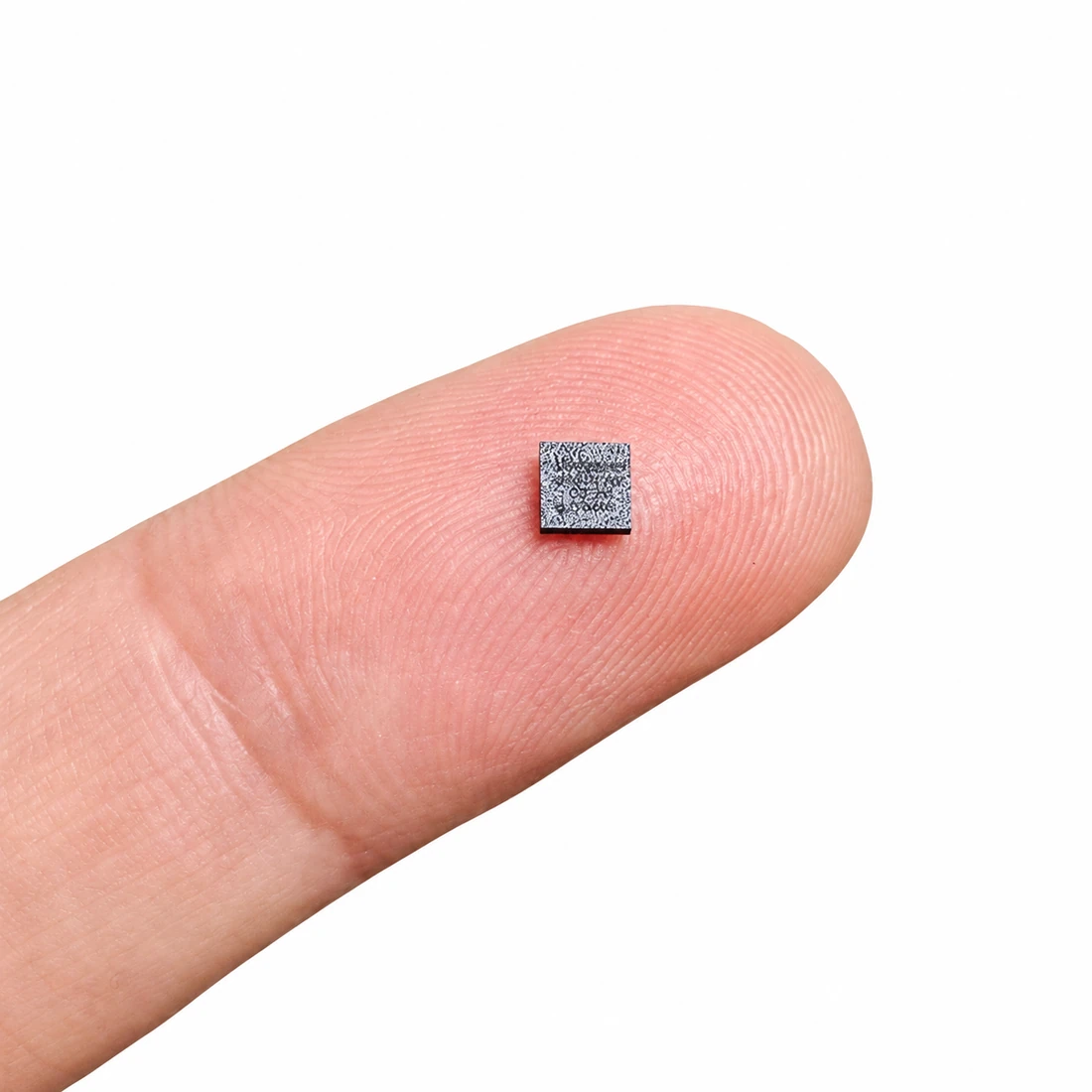
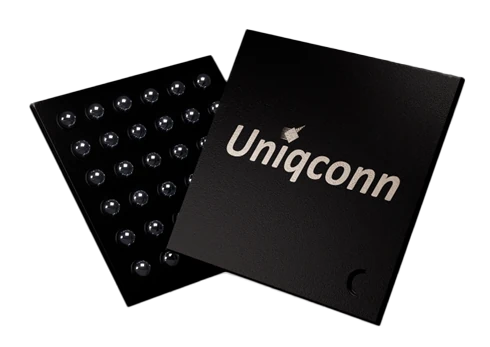
Uniqconn develops the IC, antenna, package and module in-house. UC60 is in volume production.
05 / UNIQCONN
Based in Pangyo, Korea, with teams in Shenzhen, Tokyo and San Diego to support humanoid solution integration.
Company figures from the October 2026 presentation.
LET’S BUILD TOGETHER
Start with one joint or one docking interface. Share the data interface, power requirement and available space to define the integration.
China inquiries
General Manager, China
Shenzhen, China
All other regions
For inquiries outside China, please contact us by email.
contact@uniqconn.comSend an inquiry by email